
Are you ready for AASB S2 Climate-related Disclosures?
- More organisations are required to meet AASB S2 reporting standards from 1 July 2026.
- Organisations are needing practical data solutions that provide trusted, auditable data.
- Climate reporting isn’t just a regulatory compliance exercise; done well it delivers holistic insights for strategic guidance and stronger partnerships.
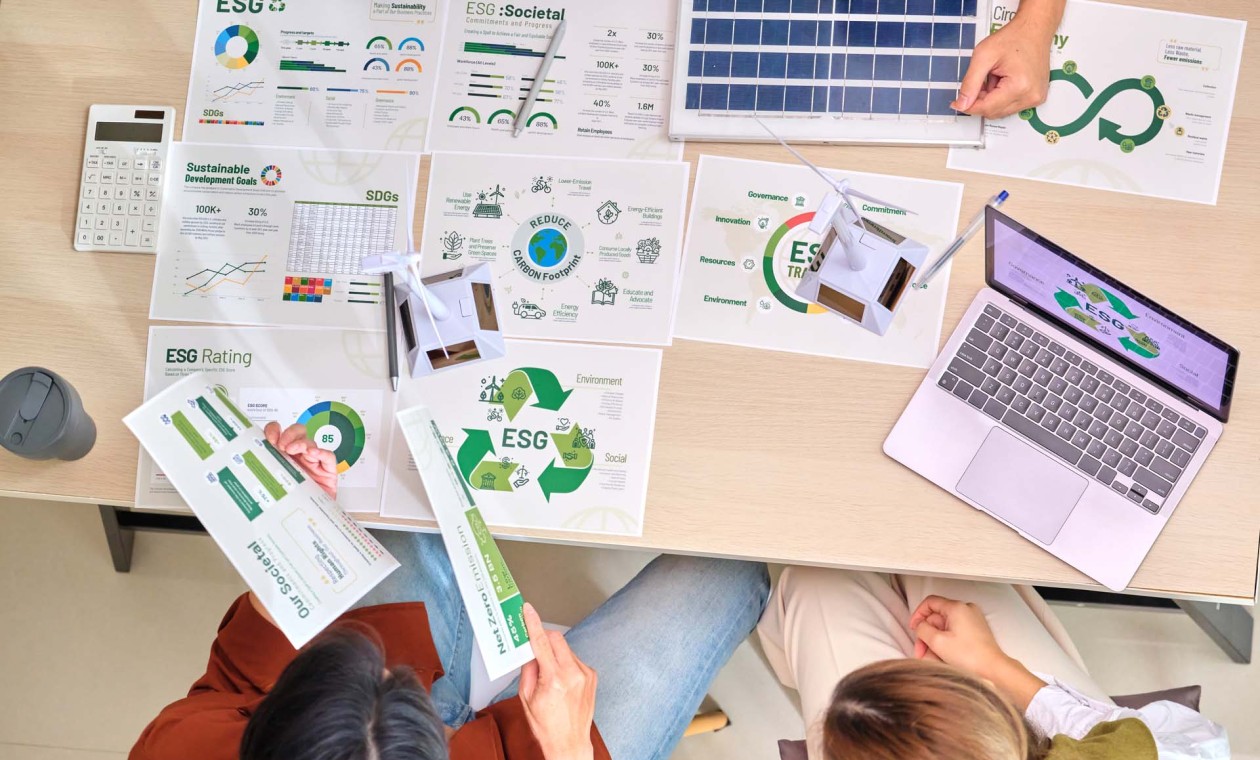
As climate reporting obligations expand across Australia, the need for accurate, reliable and usable data is critical. Yet with only 10% of the ASX reporting any emissions or sustainability plans in FY251, it’s clear that many organisations remain unequipped. In addition, the disclosure requirements to measure and report on climate-related risks across portfolios means organisations need reliable data on supply chain partners to properly understand their exposure.
With ESG reporting no longer optional for a growing number of organisations, the demand for structured, reliable data has led Equifax to create The National Catastrophe and ESG Dataset. It’s designed to help reduce manual data collection, while providing the insights and tools needed for long-term market benchmarking and modelling.
Taking a data-led approach to ESG, sustainability reporting and climate-driven supply chain risk builds a stronger foundation for growth. In today’s uncertain world, leveraging high-quality, structured data can allow you to look beyond compliance and position your organisation to leverage Australian sustainability reporting standards for a potential competitive advantage.
What are the AASB S2 Mandatory Disclosures reporting requirements?
The AASB S2 Climate-related Disclosures requires organisations to disclose information about its climate-related risks and opportunities that could reasonably be expected to affect their cash flow, access to finance, or cost of capital over the short, medium or long term. This includes climate-related physical risks, transition risks, and opportunities.
Meeting these requirements has historically been a time-consuming process involving manual data collection and significant coverage gaps in the Australian market. The Equifax ESG Dataset fills these gaps, providing reliable data drawn from across the Equifax commercial universe of active Australian companies. Customisable to your individual business requirements, it features over 135 separate data fields, designed to help your organisation to move beyond compliance and use climate-informed data for strategic decision-making.
How can you use data to automate Scope 3 reporting?
A major pain point for many organisations is meeting Scope 3 greenhouse gas emissions reporting requirements across their value chain, alongside developing an informed understanding of transition risk exposure.
By providing structured, verified data on active Australian companies, the ESG Dataset consolidates information from multiple sources. It features 7 emissions-related data fields alongside industry benchmarking to create a defensible estimate that can be used to automate Scope 3 reporting.
In addition, these supply chain emissions insights allow you to conduct deeper analysis on existing suppliers and help identify responsible procurement alternatives. By understanding climate-exposed risks in your supply chain, you can proactively plan strategies to boost long-term operational resilience.
Why auditable climate data matters
Australian sustainability reporting standards require organisations to disclose all material financial risks and financial opportunities relating to climate, yet determining what is ‘material’ often involves subjective assessment. As noted by the Australian Institute of Company Directors in its Directors Guide to Mandatory Climate Reporting, this requires careful consideration of qualitative factors, such as the industry in which an entity operates. Having access to robust data helps enable a more informed qualitative assessment, helping you provide a true and fair view of climate-risk effects and clearly justify your conclusions.
In creating the ESG Dataset, our processes aim to provide validated and defensible data to support the rigorous needs of external auditors. All outputs can be explained, evidenced and reproduced for both internal and external scrutiny. Designed to be consistent, transparent and repeatable, the dataset leverages large-scale data engineering, entity resolution and analytical modelling. This is underpinned by regular data quality audits, a documented methodology with periodic reviews, and enterprise-grade security and access controls.
What types of data points do you need to track?
Under Australian climate reporting requirements, organisations must identify, assess, monitor, and manage physical and transition climate risks across their own operations, counterparties, portfolios and supply chains.
This requires a comprehensive view of climate-related data, including:
| Environment |
|
| Social |
|
| Governance |
|
Go beyond reporting with a climate-informed lens on your business
Climate risk has the capacity to touch every part of your business. Having access to comprehensive data gives you the information required to meet AASB S2 Climate-related Disclosures while delivering the insights needed to make informed decisions around your strategic goals and partnerships.
Some of the ways you can leverage structured climate data, like the ESG Dataset includes:
| Climate reporting |
|
| Supply chain management |
|
| Portfolio risk management |
|
| Underwriting and credit decisions |
|
| Credit risk and lending |
|
| Sector and transition analysis |
|
Find out how the ESG Dataset can help streamline your AASB S2 reporting
With tailored applications and customisable data delivery options, our team is ready to help you streamline your climate-related reporting and leverage sustainability insights for strategic planning.
Contact our team for a detailed discussion on how Equifax can support your business.
Disclaimer: While Equifax uses reasonable efforts to ensure the accuracy of the information, we make no warranties or representations as to its accuracy, currency, or completeness. Users should verify information independently before relying on it and consult independent professional advice before relying on it to meet specific regulatory or compliance obligations.
This document may contain links to third-party websites. These links are provided for your convenience only. Equifax Australia does not control and is not responsible for the content, accuracy, or privacy practices of those external sites. The inclusion of any link does not imply endorsement by Equifax Australia of the site or any association with its operators. Copyright © 2026 Equifax Pty Limited ABN 29 080 662 568 All rights reserved. Information correct as of June 2026. —------------------------------------------1 ACSI - https://acsi.org.au/media-releases/asx200-ramps-up-climate-goals-but-maj...
Related Posts

Following its support of The Gender Index Australia, the research highlights how leadership gender diversity can help mitigate financial risk and protect bottom-line capital.

Inaugural iCIRT Construction Index reveals a severe delivery deficit, with small construction business exits up +58%, asset finance down -6.5%, and 35% of Australians unable to absorb more than a 5% cost overrun.